
PTFE
SHEETS
PTFE sheets (polytetrafluoroethylene), also known as Teflon® sheets, are high-performance technical materials essential for industrial applications requiring exceptional chemical, thermal, and mechanical resistance.
At Comdiflex, we supply PTFE sheets in various types and thicknesses for sealing, insulation, and industrial machining applications in highly demanding environments.
What are PTFE Sheets?
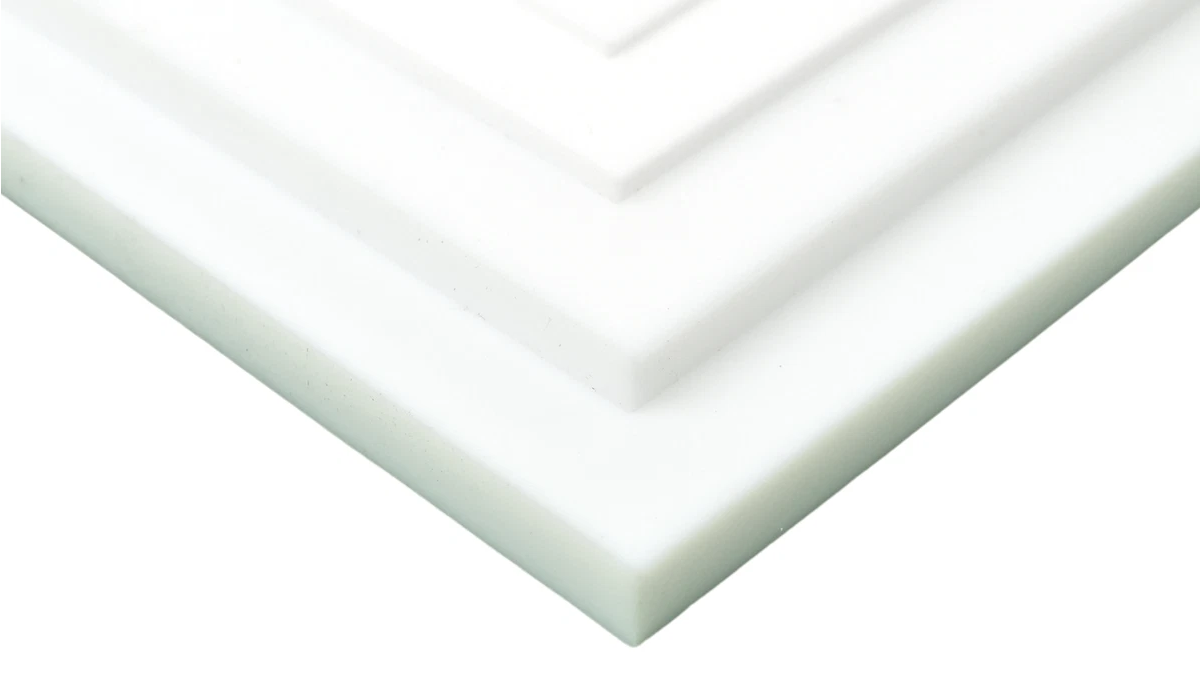
PTFE sheets are high-molecular-weight technical materials known for their extremely low friction coefficient, natural self-lubrication, and excellent thermal, chemical, and electrical resistance. These properties make them an ideal solution for sealing, insulation, and industrial machining applications where other plastics cannot perform.
PTFE is a fluoropolymer with unique characteristics: virtually no other plastic matches its combination of chemical inertness, thermal stability, and low friction coefficient.
Composition and material features
PTFE sheets are made from pure polytetrafluoroethylene, with a specific gravity of 2.3 g/cm³, giving them high mechanical strength, non-stick properties, and natural self-lubrication.
For specific applications requiring higher wear resistance or improved thermal conductivity, the sheets can be modified with technical fillers such as glass, carbon, MoS₂ (molybdenum disulfide), or bronze. These fillers alter the base properties of PTFE to tailor it to the particular requirements of each application.
Technical Properties of PTFE
PTFE stands out for a combination of properties that make it unique among technical plastics:
Thermal resistance
- Operating temperature range: -200 ºC to +250 ºC
- Maximum spot temperature: up to 300 ºC with special fillers
- Very low thermal conductivity: 0.21 kcal/h·m·mm·ºC, making it an excellent thermal insulator
Technical and tribological properties
- Exceptional friction coefficient: 0.04 on polished steel without lubrication, one of the lowest among all solid materials
- Natural self-lubrication: requires no additional lubrication in sliding applications
- Excellent flexural strength and wear resistance
Chemical resistance
PTFE offers universal chemical resistance, being practically inert to almost all chemical agents. It is only attacked by molten alkali metals and gaseous fluorine at high temperatures. This total chemical inertness makes it compatible with concentrated acids, bases, organic solvents, and aggressive fluids
Electrical properties
- High arc resistance
- High dielectric strength: between 16,000 and 20,000 V/mm, making it an excellent electrical insulator even under high-voltage conditions
Food safety
PTFE is a non-toxic material that meets safety requirements for industrial use and food-contact applications
Types of PTFE Sheets
At Kempchen Comdiflex, we offer different types of PTFE sheets depending on the requirements of each application:
Standard PTFE
Sheets manufactured by compression molding, suitable for general industrial applications where the standard properties of PTFE are required.
Virgin PTFE
Material of the highest purity with no reprocessing, recommended for critical applications in the chemical, pharmaceutical, and food industries where maximum composition assurance is needed.
Expanded PTFE
Material with a cellular expanded structure that provides greater compressibility and sealing capability, especially suitable for gaskets and applications requiring conformability.
Industrial applications of PTFE Sheets
Chemical industry
PTFE sheets are used to manufacture components in contact with acids, solvents, and chemically aggressive fluids. Their universal chemical resistance allows use in reactors, pipes, valves, and process equipment linings.
Nuclear and aerospace industry
In these highly demanding sectors, PTFE is employed in components that must withstand high thermal and chemical stress under extreme operating conditions.
Construction
PTFE sheets are used to produce non-stick and insulating parts, as well as sliding bearings in bridges and structures that require movement absorption.
Electrical sector
Thanks to its exceptional dielectric properties, PTFE is used as an insulator and in components resistant to electrical discharges.
Automotive
Applications include sealing gaskets, non-stick coatings, and friction parts that benefit from the material’s natural self-lubrication.
Advantages of PTFE Sheets
PTFE sheets offer exceptional performance in industrial environments where other technical plastics cannot compete:
- Low friction coefficient: eliminates the need for additional lubrication, preventing seizing and improving efficiency in sliding mechanisms.
- Non-stick property: allows safe use in applications where buildup or adhesion must be avoided.
- Total chemical inertness: compatible with most aggressive chemicals, ideal for the chemical, petrochemical, and pharmaceutical industries.
- Exceptional dielectric properties: excellent electrical insulation even under high-voltage conditions.
- Ease of machining: sheets can be easily machined into custom technical parts.
- Durability and strength: ensure long-lasting performance in sectors such as aerospace, construction, automotive, and advanced engineering.
Formats and presentation
At Kempchen Comdiflex, we supply PTFE sheets in the following standard formats:
- Standard sheet dimensions: 1,200 × 1,200 mm
- Available thicknesses: from 2 mm to 30 mm
Additionally, we offer custom cutting and machining services for the production of specific parts according to customer drawings: gaskets, washers, equipment components, wear parts, and customized sealing elements.